A higher water bill does not automatically mean a hidden pipe has burst. Start by comparing consumption, billing dates and recent changes at home. Then record any leak signs so a plumber can inspect the right area instead of guessing.
First compare water use, not just the bill total
Compare the current and previous billing periods and the volume shown on each bill. Note extra occupants, visitors, garden watering, cleaning or a tank refill. A longer billing period can make the total look higher. If the account or meter details seem wrong, use the water provider’s official channels to check them.
Record the meter when water use has stopped
If you can safely access your own meter, photograph its reading and time. Stop taps and water-using appliances, then check the reading again during a period with no intended use. Movement can indicate a leak, but it does not locate one. The EPA’s household leak guidance explains this observation method.
In an apartment with a shared meter, coordinate with building management. In a villa with water storage, a tank filling automatically can also explain movement; ask the plumber to consider the supply layout. Do not open a sealed meter, enter a tank or climb to inspect a roof tank.
Look for clues without dismantling plumbing
- Listen for a toilet cistern refilling when nobody has flushed.
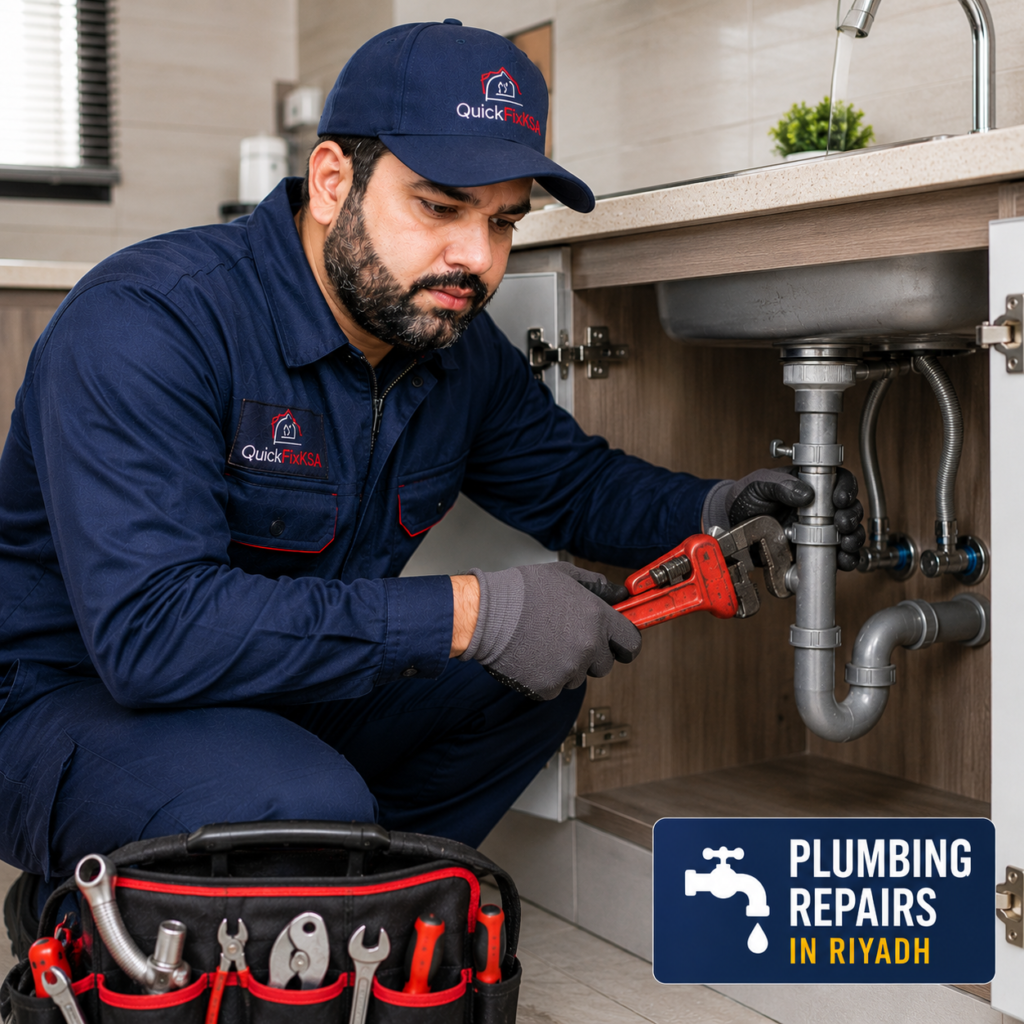
- Look at accessible tap connections and under-sink cupboards for fresh moisture.
- Photograph recurring damp patches, staining or an unexplained wet area outside.
- Note visible tank overflow from a safe ground-level position.
- Record whether the problem is constant or follows a particular appliance or fixture.
A damp patch alone does not establish the source: plumbing, drainage and other moisture problems need different investigations. Our water leak detection service in Riyadh can assess the symptoms before repair work is agreed.
Who should you contact?
For leaks at the meter or public network, use the relevant reporting channel from the National Water Company’s residential services. For an internal property issue, contact your landlord or building manager where applicable and arrange a plumbing inspection. QuickFixKSA is an independent service business, not the water utility, and cannot decide billing adjustments.
If water is reaching sockets, wiring or an electrical panel, keep away from the affected area and request urgent professional help. Do not handle wet electrical equipment. For a sudden pipe leak, use a familiar, accessible property shutoff only if it is safe; do not force valves or interfere with the utility meter.
What to send before booking a plumber
Send your Riyadh district, the property type, when the change began, photos of visible signs, and whether one room or the whole property is affected. Keep account numbers and other private bill details out of public messages. Ask what the initial inspection covers and request the proposed repair scope before work starts.
For an internal leak, see water leak repair or our plumbing services. If the main symptom is weak flow instead, read our low water pressure guide.
Does a high bill prove that there is a hidden leak?
No. Compare actual consumption and circumstances first. A meter observation and an inspection can help distinguish an internal leak from normal use or an account query.
Can you promise a lower bill after repair?
No. Stopping a confirmed leak can prevent further avoidable water use, but future bills depend on consumption and the provider’s billing process. No refund or fixed saving is promised.
Call QuickFixKSA: 058 119 2723 or message QuickFixKSA on WhatsApp to discuss plumbing help in Riyadh.
QuickFixKSA · RIYADH
Need help with this problem?
Read the service details, then tell us your Riyadh district and what you have noticed. Confirm the visit and scope before booking.
Discuss this repair on WhatsApp